EMS Shift Changes: Narcotics Handoffs Can Lead to Gaps

In emergency response, the most chaotic part of the day often isn’t racing to respond to a critical call. Those moments are expected and part of what makes the job so fulfilling.
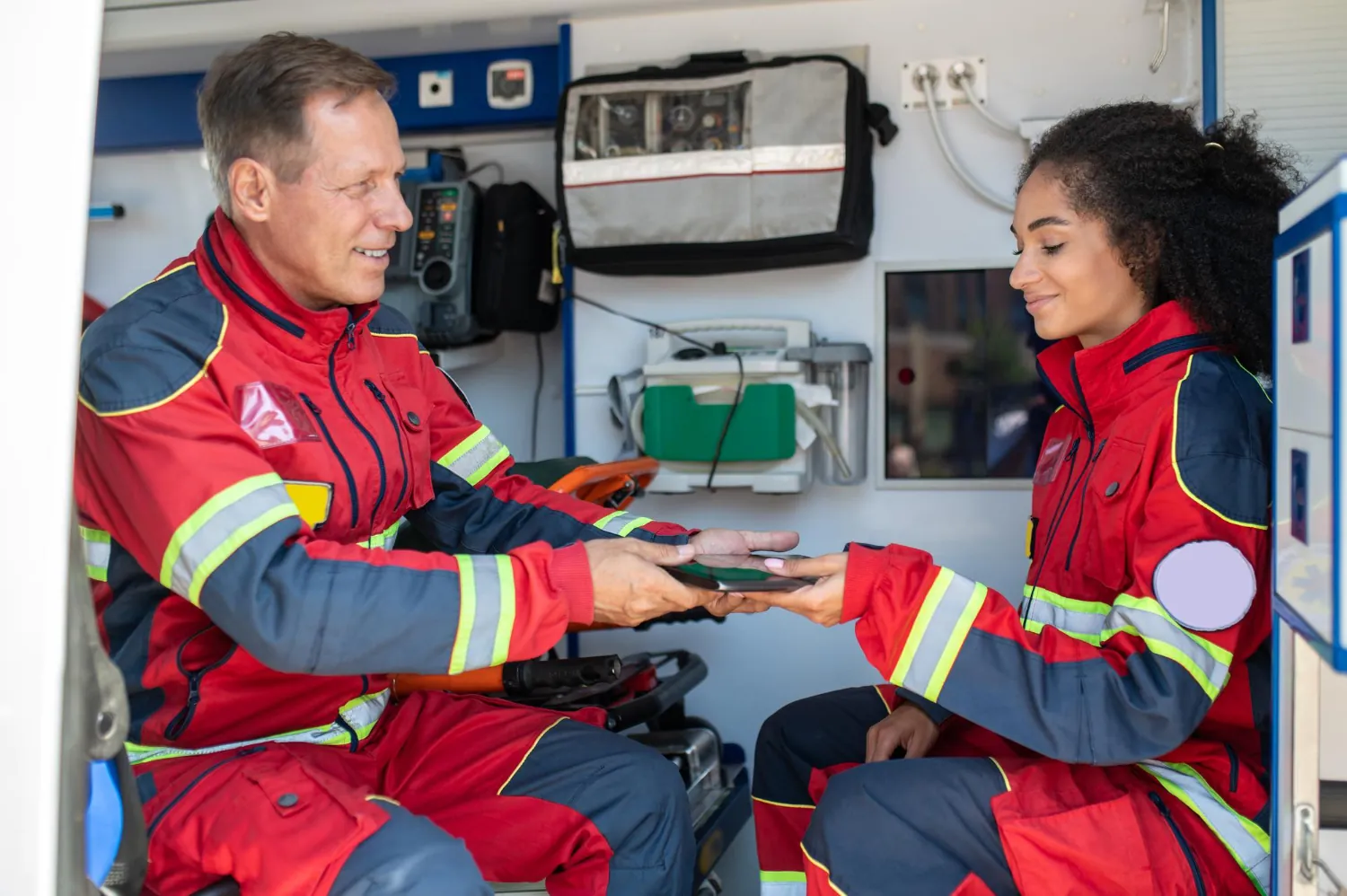
No, the most chaotic part of the day is often during EMS shift changes—the moment when one crew signs out and another crew comes on board. Those few minutes can be some of the most vulnerable times for errors, especially when controlled substances are involved.
Here’s how to shore up those gaps and make sure your team’s shift changes go as smoothly as possible.
Why Shift Change Is So Risk-Prone
Shift change is prime time for small mistakes to snowball into compliance gaps, lost medications, and serious liability for the agency and the team.
Fortunately, even though these issues occur often, they’re quite preventable when you have the right systems and practices in place. It’s about examining what happens during shift-change and how to stay organized to meet the challenges.
Several aspects of shift change make errors more likely. The first is the time pressure involved. Crews are completing 12 or 24-hour shifts; they’re exhausted and ready to head home. Incoming crews are eager to get started with their day, and the rush can lead to shortcuts and missed details.
During a shift change, there are dozens of small tasks happening at once. Vehicles and rigs are being checked, equipment is assessed, call notes are reviewed, and your team is catching up on agency updates. Amid all this activity, it makes sense why narcotics handoffs feel routine instead of critical.
Paper logs, verbal confirmations, and rushed accounts can create space for mistakes. A misplaced decimal or an illegible abbreviation may seem minor in the moment, but it can lead to major compliance issues down the road.
The other issue is that there are gaps in accountability if drugs don't get logged properly. Tracing back a mistake to the outgoing or incoming crew can often be difficult, if not impossible. EMS crews rely on trust, and a lack of clarity can create stress, suspicion, and frustrating extra administrative work.
The Risks of Narcotics Handoff Errors
Mistakes happen. Unfortunately, when it happens with narcotics handoff, it can lead to consequences. A missed entry may seem like no big deal, but even one can matter if it leads to a bigger mistake.
DEA regulations require strict tracking of controlled substances. Even a single missing log can be a compliance violation, which can lead to financial, legal, and safety risks. Failed audits, fines, and reputational damage can all happen if something is missed in the process.
But staying compliant isn’t just about protecting the agency. When something goes wrong, blame often falls on the crew (especially if the chain of custody is unclear). This can lead to lower morale and cause negative feelings amongst a team that relies on connection and communication.
The biggest risk, of course, is to patient safety. If narcotics can't truly be accounted for, providers may hesitate to administer something or may not realize that inventory is low until it's too late. Drugs can also expire or go bad if they aren't kept in certain conditions. It's essential that your tracking system reflects exactly who administered the drugs and where the chain of custody has led.
So, even though a quick handoff at shift change may seem like no big deal, it can have an impact on everything: compliance, safety, and trust. It's far better to get it right than to try to make amends after damage is done.
The “Golden Hour” of Shift Change
In trauma care, EMS leaders sometimes call the shift change the “golden hour.” That’s because this is the prime time when attention to detail matters. It can make or break the accuracy of your agency, putting everyone at risk.
When it comes to the golden hour, narcotics tracing requires two things:
- Accurate counting and verification
- Timely documentation
Both of these things must happen without fail. As part of rig check, the outgoing and incoming crews should count every controlled substance together, confirming that the totals match the log and what was handed off. The handoff should be logged immediately, not put off until later in the shift. By doing it in a timely manner, you’ll avoid the risk of errors and disputes.
So why does the golden hour get so hectic? Many agencies rely on paper logs, clipboards, and spreadsheets to track narcotics. These older systems can work in theory, but when thrown into practice, they're prone to failure.
Handwriting errors can create confusion. Let’s face it—in a rush, most folks struggle to write legibly, and even something as minor as an errant mark in a prescription could read as a dosage change.
Paper logs have many other drawbacks, too. It's easy to lose paper. Paper is notoriously easy to damage as well. This is especially an issue in inclement weather, when paramedics respond to outdoor emergencies.
Spreadsheets may not be updatable in real time. They can be confusing and leave a lot of gaps between crews. Even if people are diligent with spreadsheet entries, they can be a nightmare to assess during an audit. Manual counts depend on human accuracy. When humans are tired, distracted, or rushed (i.e., during shift change), things are more likely to slip through the cracks.
The bottom line is that traditional methods of narcotics tracking can’t keep up with the demands of modern EMS work—especially during the golden hour, or anytime things get chaotic.
Practical Tips for Safer Shift Change
Technology is a big part of the solution for accurate narcotics tracking, especially during busy shift changes. But another critical factor is the culture of your team. Agencies that excel in shift change accountability tend to share certain characteristics.
For teams that have mastered shift change, they typically see accuracy as non-negotiable and embrace compliance as part of their professional duty. Technology is viewed as a support, rather than a burden or change to avoid. When shift change is treated like any mission-critical task, the chaos fades.
Shift change is actually one of the most overlooked and understated risk points in EMS. With multiple tasks requiring attention, it's easy to see why it creates a perfect storm for gaps and liabilities to emerge.
Instead, encourage your team to embrace shift change as a “golden hour” for due diligence. Using https://logrx.com/mobile-app/ can make it easier to log and verify. You’ll lower the risk of errors, protect providers, and strengthen compliance.
Make shift changes structured with step-by-step checklists for handoffs (including a dedicated step for tracking narcotics). Requiring dual verification to log the drugs creates built-in accountability and lowers the risk of errors.
Train new providers and make narcotics handoffs a key part of your onboarding. It's easy to assume that rookies will just "pick it up," but that can be setting them (and your team) up for failure.
Make sure your team is staying compliant by conducting spot checks and regular audits. Highlight those teams that consistently handle the change well. Acknowledgment and positive reinforcement go a long way to help your team stay motivated.
How LogRx Closes the Gaps
LogRx is here to help you close tracking gaps and make sure your team’s entries are accurate. We designed our mobile-first software with the realities of EMS shift work in mind. That’s why there are key features that especially support shift change:
- Instant mobile logging from handheld devices.
- Real-time updates so supervisors can see handoffs immediately.
- Dual verification for outgoing and incoming crews to create a digital chain of custody.
- Audit-ready entries that are time and user-stamped, and then securely stored.
- Offline functionality for field work, when connectivity may be poor.
By making logging quick, easy, and verifiable, LogRx removes the chaos from shift change. From the Administrative Portal, managers and administrators have a fast and clear overview of exactly where everything stands. The user-friendly interface makes tracking simple and intuitive.
Best of all, your team doesn’t need to buy new hardware or supplies. LogRx works right from handheld devices like phones, so it’s easy for everyone to track, every single time.
If you'd like to learn more about how LogRx can work for your team, please reach out. We're happy to share more information with you to help your team master narcotics tracking, even during their busiest time of day.













.webp?t=1763148371621)